
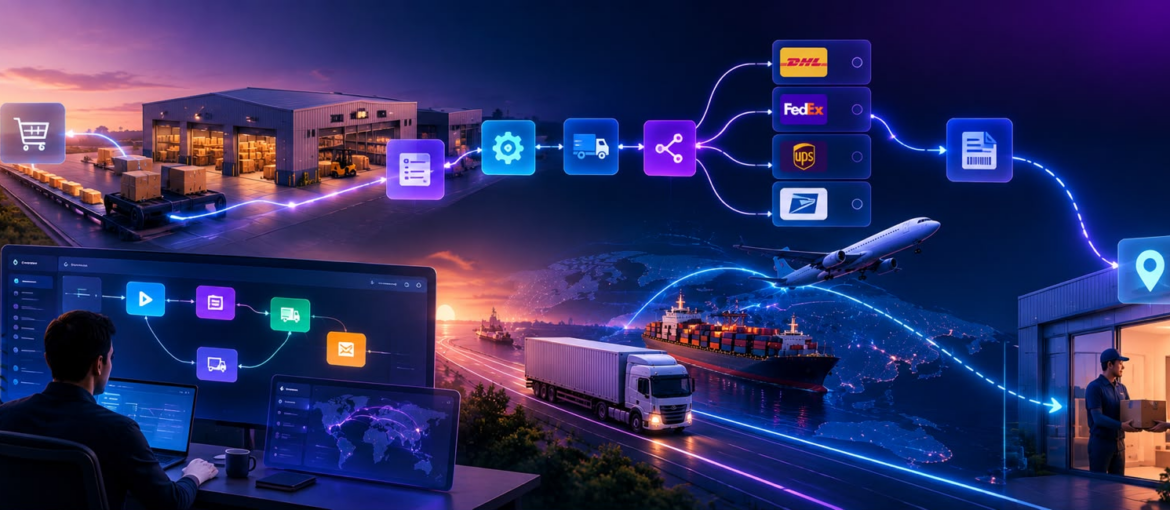
The Problem: Manual Workflows Are Slowing Logistics Down
If you run a logistics business, you know the drill — endless spreadsheets for tracking shipments, manual data entry between systems, phone calls to confirm pickups, and email chains that never end. These manual workflows eat up hours every day and lead to costly errors.
According to industry studies, logistics companies lose up to 30% of their operational time on repetitive manual tasks. That is time your team could spend on growing the business instead of copying data from one system to another.
What Is No-Code Workflow Automation?
No-code workflow automation lets you build automated business processes using a visual drag-and-drop interface — no programming skills needed. Think of it as creating a flowchart that actually runs your operations.
Instead of writing code, you connect triggers (like “new order received”) to actions (like “create shipment,” “notify driver,” “update customer”) using simple building blocks. If you can draw a process on a whiteboard, you can automate it with no-code.
How It Works in Logistics
Here are real examples of what no-code automation looks like in a logistics operation:
- Order Processing: When a new order comes in (via email, portal, or API), the system automatically creates a shipment record, assigns it to the right carrier, and sends confirmation to the customer — all without anyone touching a keyboard.
- Document Management: Bills of lading, invoices, proof of delivery — these documents get generated, routed for approval, and filed automatically based on rules you set.
- Status Updates: Instead of someone manually checking and updating shipment statuses, the system pulls tracking data and pushes real-time updates to customers and internal teams.
- Exception Handling: When something goes wrong — a delayed shipment, a failed delivery attempt — the system automatically escalates to the right person with all the context they need.
- Billing and Invoicing: Rates get calculated, invoices get generated, and payment reminders get sent — all based on the rules you define once.
Why No-Code Matters for Logistics Companies
1. Speed of Implementation
Traditional software development takes months. With no-code, you can build and launch a new workflow in days or even hours. Need to add a new carrier onboarding process? Build it this afternoon.
2. Your Operations Team Owns It
The people who understand your logistics processes best — your operations managers — can build and modify workflows themselves. No waiting for IT tickets or expensive developers.
3. Easy to Change
Logistics is unpredictable. Routes change, regulations update, customers have new requirements. With no-code, you can adjust your workflows as fast as your business changes.
4. Lower Cost
Custom software development for logistics can cost hundreds of thousands of dollars. No-code platforms give you similar capabilities at a fraction of the price, with monthly subscriptions instead of big upfront investments.
5. Connects Everything
Modern no-code platforms integrate with your existing tools — your TMS, WMS, accounting software, communication tools, and more. They act as the glue that connects your tech stack without replacing it.
What to Look for in a No-Code Platform for Logistics
Not all no-code tools are built for logistics. Here is what matters:
- Industry-specific templates: Look for pre-built workflows for common logistics processes like order management, dispatch, and invoicing.
- Integration capabilities: The platform should connect with logistics systems (TMS, WMS, ERP) and communication tools you already use.
- Mobile access: Your drivers and field teams need to interact with workflows from their phones.
- Scalability: It should handle your volume today and grow with you — from 100 shipments a month to 10,000.
- Data security: Logistics involves sensitive business and customer data. Make sure the platform meets your security requirements.
Getting Started
The best way to start with no-code automation is to pick one painful manual process — the one your team complains about most — and automate it. Common starting points include:
- Customer quote requests and responses
- New shipment booking and confirmation
- Delivery status notifications
- Invoice generation and follow-up
Once you see the time savings from that first workflow, expanding to other processes becomes a natural next step.
The Bottom Line
No-code workflow automation is not about replacing your team — it is about freeing them from repetitive tasks so they can focus on what humans do best: building relationships, solving complex problems, and growing the business. For logistics companies looking to compete in 2026 and beyond, it is quickly becoming a must-have rather than a nice-to-have.




Leave A Comment